

Introduction
Coldmags com is a search phrase that appears alongside terms such as cold cap chemo, cold cap, cold capping, and coffee can. These keywords can create confusion because they do not necessarily describe the same subject. In particular, cold cap chemotherapy and cold capping belong to the topic of scalp cooling, while a coffee can normally has an entirely different meaning.
Cold capping has attracted attention because some people receiving chemotherapy want to understand whether scalp cooling may reduce treatment-related hair loss. The positive side is that cold caps can help some patients retain more hair. The negative side is that they do not work equally well for everyone, and they can involve additional time and discomfort.
This Coldmags com guide explains the terminology carefully without assuming an unverified connection between the website name and medical treatment. It covers how cold caps work, what patients may experience, potential benefits and limitations, and important questions to consider before using scalp cooling during chemotherapy.
What Is Coldmags com?
Coldmags com is a keyword people may encounter while searching online. However, limited reliable public information is available to establish detailed facts about the website’s ownership, purpose, editorial structure, or connection with specific subjects.
For that reason, it would be inaccurate to claim that Coldmags com is officially a medical platform, chemotherapy resource, scalp-cooling provider, or coffee-related website without reliable supporting evidence. Readers should distinguish between information about a domain and informational keywords that may appear alongside it in search results.
Why Related Search Terms Need Context
Search engines frequently associate words because users search for similar phrases, spellings, or combinations. That does not automatically establish a factual relationship between every keyword.
Terms such as cold cap chemo and cold capping have a recognized medical context. Coffee can, however, generally refers to a container for coffee and should not automatically be treated as a synonym for cold cap.
What Is Cold Cap Chemo?
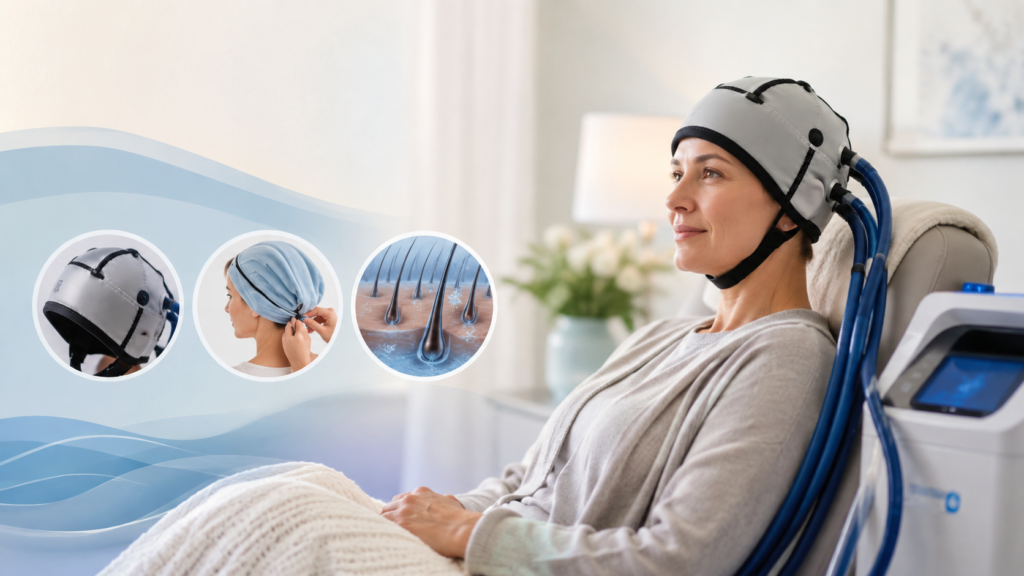
Cold cap chemo commonly refers to the use of scalp cooling before, during, and sometimes after chemotherapy. A specially designed cooling cap lowers the temperature of the scalp while chemotherapy treatment is being administered.
Chemotherapy can affect rapidly dividing cells. Because cells involved in hair growth can also be affected, hair loss is a common side effect of certain chemotherapy drugs. Scalp cooling is designed to reduce the exposure of hair follicles to chemotherapy and potentially limit hair loss.
Understanding Scalp Cooling
A scalp-cooling cap fits closely around the head. Cooling causes blood vessels in the scalp to narrow temporarily, which can reduce blood flow in that area.
Cooling may also decrease activity within hair follicles. Together, these effects may reduce the amount or impact of chemotherapy reaching the follicles. However, this does not mean scalp cooling completely prevents hair loss.
Cold Cap vs Scalp Cooling
The phrases cold cap and scalp cooling are often used interchangeably, but systems can differ. Some cold caps are manually cooled and replaced periodically to maintain the required temperature.
Other scalp-cooling systems use equipment that continuously circulates cooling liquid through a fitted cap. The exact process depends on the system available at a treatment center.
How Does Cold Capping Work During Chemotherapy?
Cold capping usually begins before the chemotherapy infusion starts. The scalp needs time to cool to the required temperature before medication is administered.
Cooling generally continues throughout the infusion and for a period afterward. The exact timing can vary according to the chemotherapy regimen, scalp-cooling system, and clinical protocol.
Before Chemotherapy
The cooling cap is fitted closely to the patient’s head. A good fit is important because areas that do not maintain adequate contact may not cool as effectively.
Patients may initially experience an intense cold sensation. For some people, this becomes easier to tolerate after the first several minutes as they adjust to the temperature.
During Chemotherapy
The scalp remains cooled while chemotherapy medication is administered. Depending on the system, the cap may remain in place continuously or manually cooled caps may need to be changed.
Patients should follow instructions from their treatment team rather than trying to establish their own cooling schedule. Chemotherapy treatments and cooling requirements are not identical for every person.
After Chemotherapy
Scalp cooling often continues after the chemotherapy infusion has finished. This period is sometimes called post-infusion cooling.
The duration varies according to the treatment and cooling protocol. This additional time is one reason a cold-capping appointment may take longer than chemotherapy without scalp cooling.
Potential Benefits of Cold Cap Chemo
The main reason people consider cold cap chemo is the possibility of reducing chemotherapy-induced hair loss. Keeping some or much of their hair can be personally meaningful for patients.
Hair retention can also make changes in appearance less noticeable to other people. Nevertheless, scalp cooling should be viewed as a supportive option rather than a guaranteed method of preventing hair loss.
Reduced Hair Loss for Some Patients
Research and clinical use have shown that scalp cooling can reduce hair loss for some people receiving certain chemotherapy treatments. Success depends on multiple factors.
The chemotherapy drugs, dosage, treatment schedule, cooling system, cap fit, and individual response can all influence results.
Maintaining a Familiar Appearance
Hair loss can make cancer treatment visible in ways some patients would prefer to avoid. Retaining hair may help them maintain a more familiar appearance during treatment.
This benefit is personal. Some patients place great importance on hair preservation, while others decide that the additional time and discomfort associated with cold capping are not worthwhile for them.
Limitations of Cold Capping
Cold capping has potential advantages, but it also has important limitations. One of the biggest is that there is no guarantee that a person will keep all of their hair.
People may still experience shedding, thinning, patchy hair loss, or substantial hair loss while using scalp cooling. Expectations should therefore remain realistic.
Results Vary Between Patients
Two people undergoing chemotherapy can have very different experiences with cold caps. The type and dose of chemotherapy can strongly influence how effective scalp cooling is.
A successful experience for one patient cannot predict another person’s result. Personal testimonials can provide perspective, but they should not replace medical guidance.
Treatment Sessions Can Take Longer
Cold capping can add time before and after chemotherapy. This may make an already demanding treatment day longer.
People considering scalp cooling should ask their treatment center how much additional time is normally required for their specific chemotherapy regimen.
Possible Discomfort and Side Effects
Scalp cooling is not comfortable for everyone. The first stage of cooling can feel particularly intense because the scalp is exposed to very low temperatures.
Some people may experience headaches, a sensation of pressure, or general discomfort. Individual tolerance varies considerably.
Feeling Extremely Cold
Patients can feel cold during treatment, particularly around the head. Treatment centers may suggest practical comfort measures depending on their policies and the cooling system being used.
Patients should tell healthcare staff if the discomfort becomes difficult to manage rather than attempting to modify medical equipment themselves.
Headaches and Scalp Sensations
Some people report headaches or uncomfortable scalp sensations while wearing a cold cap. These experiences can range from mild to more noticeable.
Any unusual, severe, or persistent symptoms should be discussed with the healthcare team. Medical professionals can determine whether continuing scalp cooling is appropriate.
Hair Care During Cold Capping
Hair can become more fragile during chemotherapy even when scalp cooling is used successfully. Gentle hair care is therefore commonly emphasized during the cold-capping process.
The objective is to minimize unnecessary pulling, heat, friction, and other forms of stress on vulnerable hair.
Gentle Washing and Handling
Patients may be advised to handle their hair carefully, especially when it is wet. Excessive pulling or aggressive brushing can put additional stress on weakened hair.
Specific hair-care recommendations can vary between treatment centers and cooling systems. Patients should follow the instructions supplied by their healthcare or scalp-cooling team.
Hair Shedding Can Still Occur
Finding hair on a brush or noticing shedding does not necessarily mean scalp cooling has completely failed. Some degree of shedding can occur even when a person ultimately retains a meaningful amount of hair.
However, heavy or unexpected hair loss should be discussed with the treatment team if the patient has questions about continuing cold capping.
Who Should Consider Cold Capping?
Whether cold capping during chemotherapy is suitable depends on the patient’s medical circumstances. It should not be treated as an option that is automatically appropriate for everyone receiving chemotherapy.
The decision should involve the oncology team. They can consider the cancer type, chemotherapy regimen, available cooling equipment, medical history, and other relevant factors.
Ask the Oncology Team First
Anyone interested in scalp cooling should ask their oncologist or chemotherapy team whether it is appropriate for their treatment.
Healthcare professionals can also explain what level of hair retention may reasonably be expected with the specific chemotherapy drugs being used.
Availability Can Vary
Not every chemotherapy center offers the same scalp-cooling system. Equipment, protocols, costs, and support may vary between hospitals and treatment facilities.
Patients should therefore ask their own treatment center about availability instead of assuming a particular cold cap system will be offered.
What Determines Cold Cap Effectiveness?
There is no single success percentage that applies universally to every cold-capping patient. Effectiveness depends on several interconnected factors.
The chemotherapy regimen is particularly important because some medications are more strongly associated with hair loss than others.
Chemotherapy Type and Dosage
Different chemotherapy drugs affect hair follicles differently. Dosage and combinations of medications can also influence the extent of hair loss.
Therefore, broad claims that a cold cap will always prevent chemotherapy hair loss should be avoided.
Cap Fit and Cooling Consistency
A properly fitted cap helps provide consistent scalp contact. Poor contact may leave certain areas insufficiently cooled.
With professionally managed systems, staff can help with fitting and provide instructions for maintaining the required cooling process.
Individual Response Matters
Biology also plays a role. Patients receiving similar treatment can experience different amounts of hair loss even without considering scalp cooling.
For this reason, cold cap effectiveness is better understood as a possibility rather than a guaranteed outcome.
Cold Capping and Emotional Well-Being
Hair can form an important part of personal appearance and identity. For some patients, keeping their hair during chemotherapy provides a sense of privacy and normality.
Other patients may find the cold-capping process stressful or uncomfortable. Neither choice is universally right. The appropriate decision depends on medical advice and individual priorities.
Setting Realistic Expectations
Realistic expectations can make the process easier to manage. Cold capping should generally be approached as an attempt to reduce hair loss, not necessarily eliminate it.
Knowing that thinning and shedding remain possible can help patients make an informed decision before treatment begins.
Cold Cap, Cold Capping, and Coffee Can: Understanding the Keywords
People researching Coldmags com may encounter phrases including cold cap, cold capping, cold cap chemo, and coffee can. It is important not to combine these phrases simply because their wording appears similar.
Cold cap and cold capping clearly relate to scalp cooling in the chemotherapy context. A coffee can normally refers to a container designed to hold coffee and has no inherent connection with chemotherapy scalp cooling.
Avoiding Search-Term Confusion
Search terms can overlap because of spelling, autocomplete suggestions, user behavior, or algorithmic associations. Similar-looking words do not establish identical meanings.
Readers seeking medical information should therefore focus on established terminology such as chemotherapy scalp cooling, cold cap treatment, chemotherapy hair loss, cooling cap, and hair preservation during chemotherapy.
Important Questions Before Starting Scalp Cooling
Patients considering scalp cooling should understand both its potential and its limitations before beginning. Questions about expected effectiveness, additional treatment time, costs, hair care, and possible discomfort can help establish realistic expectations.
It is also useful to ask whether the treatment center has experience with the available system and what patients should do if they experience significant shedding or cannot tolerate the cooling.
Medical Guidance Remains Essential
Online information can help patients understand terminology, but it cannot determine whether scalp cooling is medically appropriate for a particular individual.
Cancer type, chemotherapy medication, dosage, overall treatment plan, and medical history require professional assessment. Decisions about cold cap chemo should therefore be made with qualified healthcare professionals.
Frequently Asked Questions
What is Coldmags com?
Coldmags com is an online search term and domain name. Limited reliable public information is available about its exact purpose and operation, so it should not automatically be described as a medical or scalp-cooling platform without verified evidence.
What is cold cap chemo?
Cold cap chemo refers to scalp cooling used around chemotherapy sessions. It aims to reduce chemotherapy-related hair loss by cooling the scalp and hair follicles.
Does cold capping completely prevent hair loss?
No. Cold capping may reduce hair loss for some patients, but it does not guarantee complete hair preservation. Shedding and thinning can still occur.
How does a cold cap work?
A cold cap lowers scalp temperature. This reduces blood flow and metabolic activity around hair follicles, which may reduce the impact of chemotherapy on those follicles.
Is cold capping suitable for everyone?
No. Suitability depends on factors including the cancer type, chemotherapy regimen, individual medical circumstances, and clinical recommendations. Patients should consult their oncology team.
Can hair still shed while using a cold cap?
Yes. Some shedding can occur even when scalp cooling is helping a patient retain part of their hair.
Does cold capping make chemotherapy appointments longer?
It can. Cooling generally begins before chemotherapy and continues during treatment and for a period afterward, potentially adding time to the overall appointment.
Are cold cap and scalp cooling the same thing?
The terms are often used in similar contexts, although the equipment can differ. Some systems continuously circulate coolant, while other approaches use manually cooled caps.
Is coffee can another term for cold cap?
No. A coffee can generally means a container used for storing coffee. It should not be considered another medical term for chemotherapy scalp cooling.
Should patients use a cold cap without medical advice?
Patients should discuss scalp cooling with their oncology team before using it. Healthcare professionals can determine whether it is appropriate for the patient’s particular treatment and medical circumstances.
Conclusion
Coldmags com is a search term that may appear alongside cold cap chemo, cold cap, cold capping, and coffee can, but these terms should not be treated as automatically connected. Reliable public information is currently insufficient to make detailed claims about Coldmags com or establish it as a specialist medical resource.
Cold capping itself is a recognized scalp-cooling approach used by some chemotherapy patients to try to reduce treatment-related hair loss. Its major positive feature is the possibility of retaining more hair during certain chemotherapy treatments. Its limitations include discomfort, longer treatment sessions, variable results, and the fact that hair loss can still occur.
Anyone considering scalp cooling should discuss the option with their oncology team. Understanding both the potential benefits and limitations makes it easier to approach cold capping with realistic expectations and make an informed decision based on individual treatment needs.